Ask five vendors if they do orchestration and you’ll get five yeses. It’s in your RPA platform, your iPaaS, your agent framework and your workflow tool. Everyone is an orchestrator now, which is exactly why the word has stopped telling you anything.
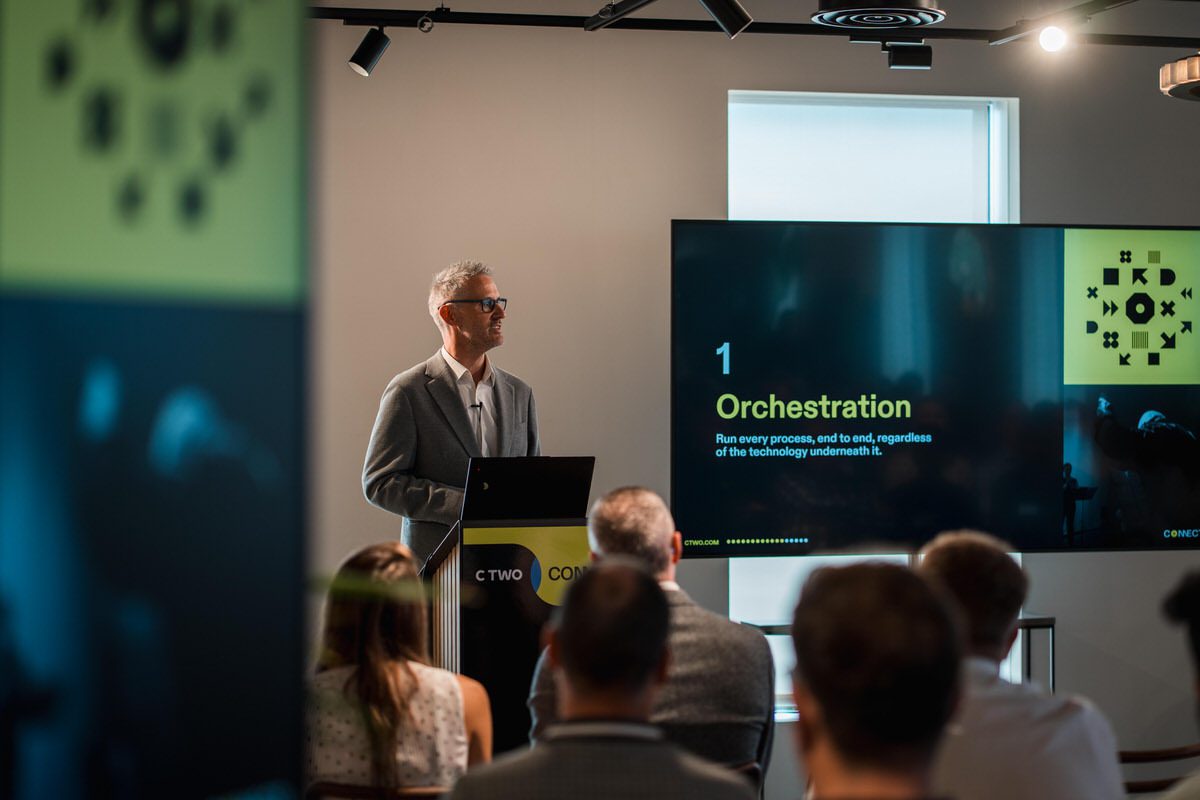
At Connect London, Colin Redbond put it plainly: you’re probably being sold orchestration in every product you buy. The question is whether you’re buying a universal orchestrator or orchestration baked into a single platform. Those are different jobs. One moves a task from step to step inside a vendor’s stack. The other runs work across every stack you own.
Here are four tests for the real thing
Does it work across platforms? If it only orchestrates its own execution layer, you’ve moved the lock-in up a level and called it progress.
Is it neutral? Neutrality is a test, not a feature. Ask whether the vendor would ever tell you to switch something off, or move work to a cheaper model or a different platform. If the answer is no, you have a referee on the same payroll as the player.
Does it work at item level? Process-level orchestration tells you a workflow ran. Item-level orchestration tells you what order each piece of work ran in, on which actor, against which SLA, at what cost. That is where failover and recovery live.
Does it fit the architecture you already have? Nobody should be mandated onto a particular LLM or tool. Your IT team has already made those choices.
The customers on stage at Connect London were running these tests whether they knew it or not.
Partners use universal queues as the single front door for work. Items arrive in the orchestration layer first, then get routed to legacy RPA, Power Automate or an API by rule. When something breaks mid-migration, the process controller stops routing to the failing target. Work keeps arriving and the queue holds it. Rolling back is a routing change, not a rollback script.
The impact of real universal orchestration
A large UK based insurer put an entire RPA estate through C TWO in one move. 150 business processes became 874 orchestrated tasks once the supporting work was counted. Over four weeks, licences reduced dramatically while SLA adherence held at 99.3%.
A large German bank found machines sitting idle because processes started at eight when the work arrived at noon. Trigger based starts freed around 60 virtual machines.
The same pattern shows up each time. The value isn’t in any one technology. It’s in deciding where work goes, independently of what executes it.
Orchestration is market language, and plenty of vendors will claim it. What C TWO builds is the independent layer above all of them, and we’re moving toward universal orchestration one item, one actor and one integration at a time.
Run the four tests on whatever you’re buying. If one fails, ask who owns your control layer, and whether you chose them or ended up with them by default.
Universal orchestration
Learn more about AMP, C TWO’s universal orchestration platform here.
Watch sessions from Connect London with C TWO CEO, Paul Donaldson and CPO, Colin Redbond.