
A customer told a pure play automation vendor they needed an independent layer on top. The vendor asked why, given the automation works 99% of the time. The answer: it’s the 1% that hurts us.
The 1% of bots that miss an SLA. The 1% of agents that burn tokens nobody budgeted for. The 1% that quietly breach an internal policy and end up in front of a regulator.
You don’t find the 1% in a report. You find it because someone was watching, or because something was set up to respond.
A European energy business made the same point from the other side. At close to 2 million customers, a 1% failure rate on a bill change is a very large number of people. But the same 1% on an internal tool, where a colleague can pick up the slack by hand, is a nuisance. The job is knowing which one you’ve built, and deciding up front how much of the gap is worth closing.
That decision needs running machinery behind it, which is what operations means in C TWO. It’s where governance and security live day to day, across bots, agents, scripts and humans in one place.
The impact of effective operations
Fewer people babysitting. A large German bank’s process controller team went from eight people to six, heading to five. Rules in the platform restart processes after termination so people stop checking by hand.
Humans in the loop that people actually use. A European HR team was logging into a separate application to enter two-factor codes, and robots sat blocked for hours. They moved the interaction into Microsoft Teams, with every login session tracked as a queue item in C TWO. Runs that finished mid-afternoon on a bad day now finish by late morning. The team that ran the logins grew from three people to roughly 15, because it became easy.
Video coming soon
Governance you can’t ignore
Customers were blunt: governance written in an internal article means nobody cares. You have to enforce it technically, then guide people to the right tool.
Our latest release has extended this with Automated Runbooks. Take the operating procedure someone wrote down, and turn it into configurable responses that trigger off an event. In the Connect demo, an SLA breach raised a Slack message with options: add capacity, reassign work, escalate. A human chose, and an agent worked out the scaling. We kept the human there on purpose, because anything that adds licences or cost deserves oversight.
A large UK bank called the same idea proportionate intervention. Not everything needs a kill switch. Sometimes it’s narrowing access, rerouting work or pausing one agent. Every action should be authorised and auditable.
Seeing a problem is monitoring. Operations is what you do next, with the governance to prove they did it.
Vendor-neutral operations
On 15 October we launched the universal orchestration layer: orchestration, operations and intelligence across every bot, script, API and agent in your estate, with governance outside any single vendor’s dashboard.
Over 170 customers across 14 countries already run this way.
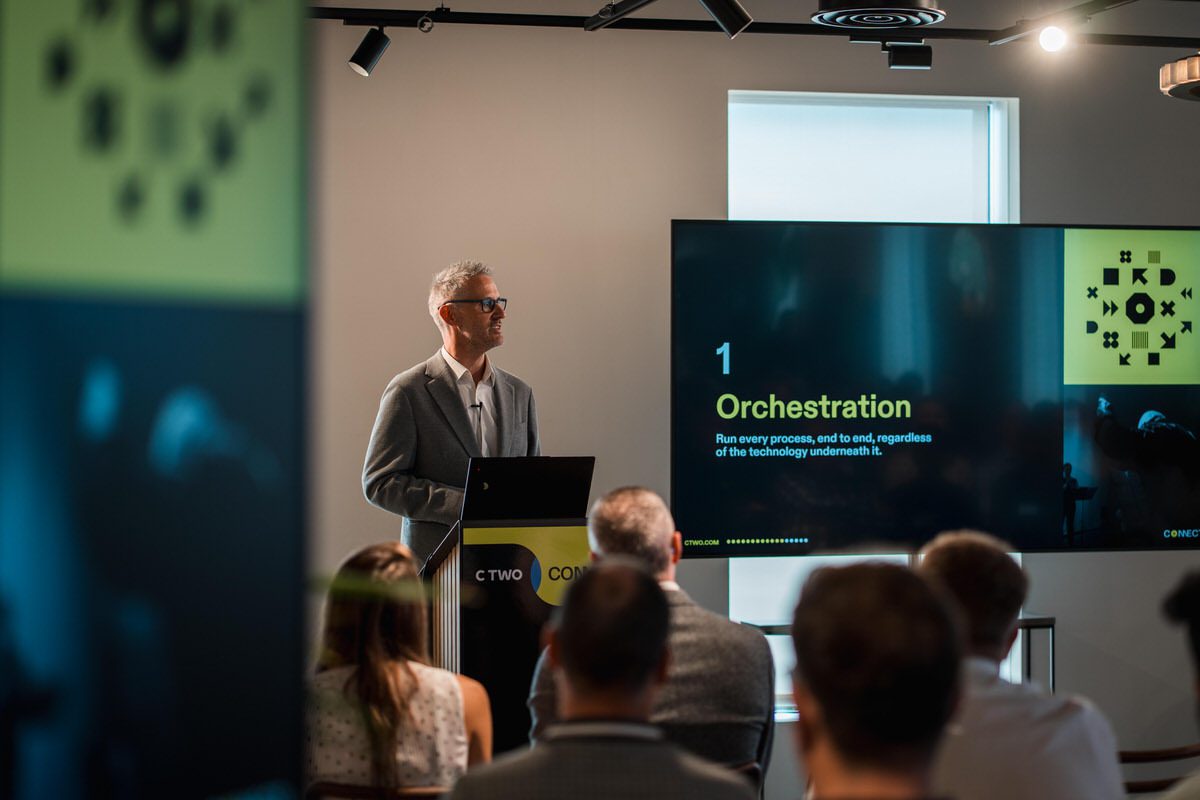
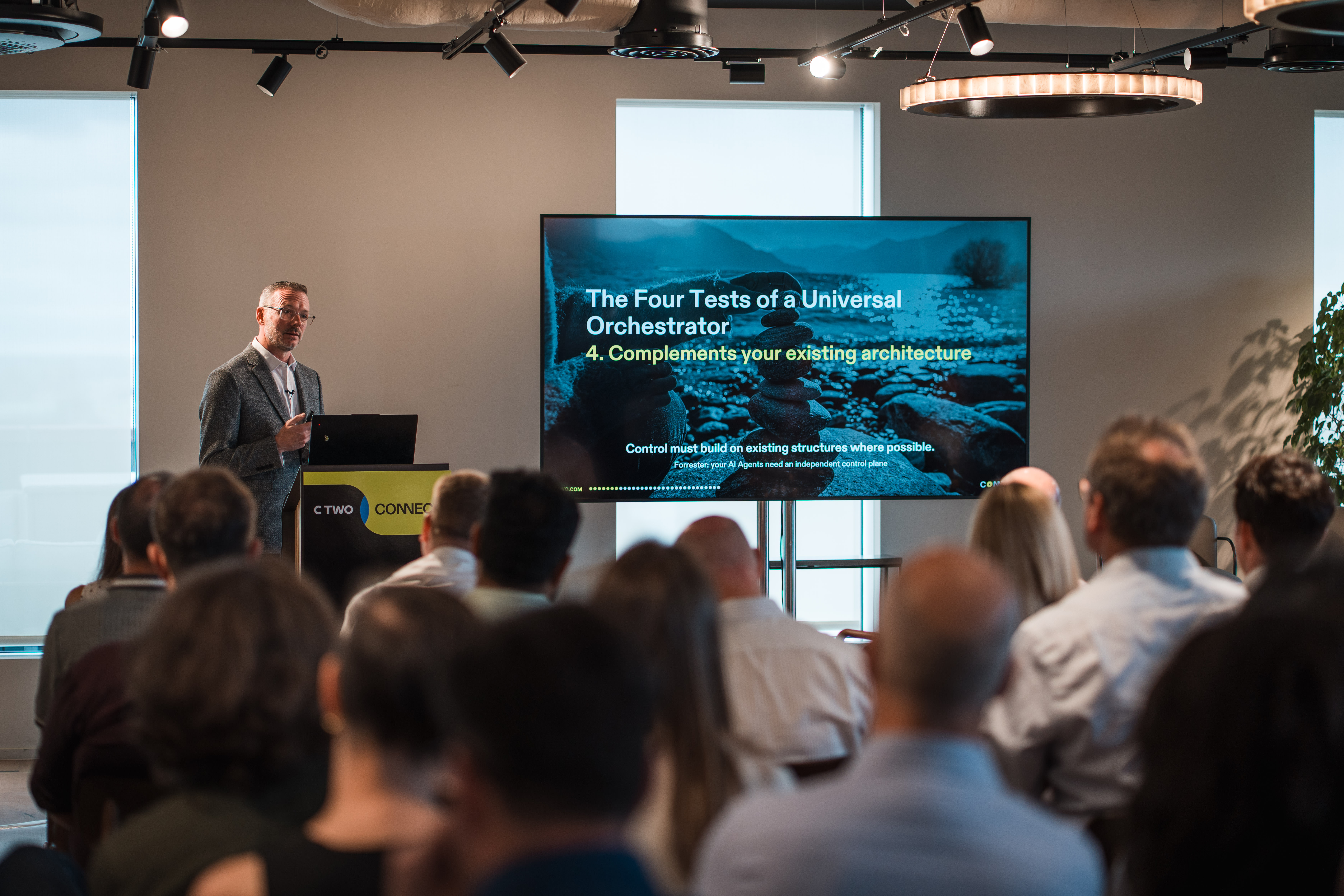
Watch Colin Redbond, C TWO Chief Product and Technology Officer, demo the new C TWO AMP operations features here.
Watch E.ON’s case for independent orchestration